
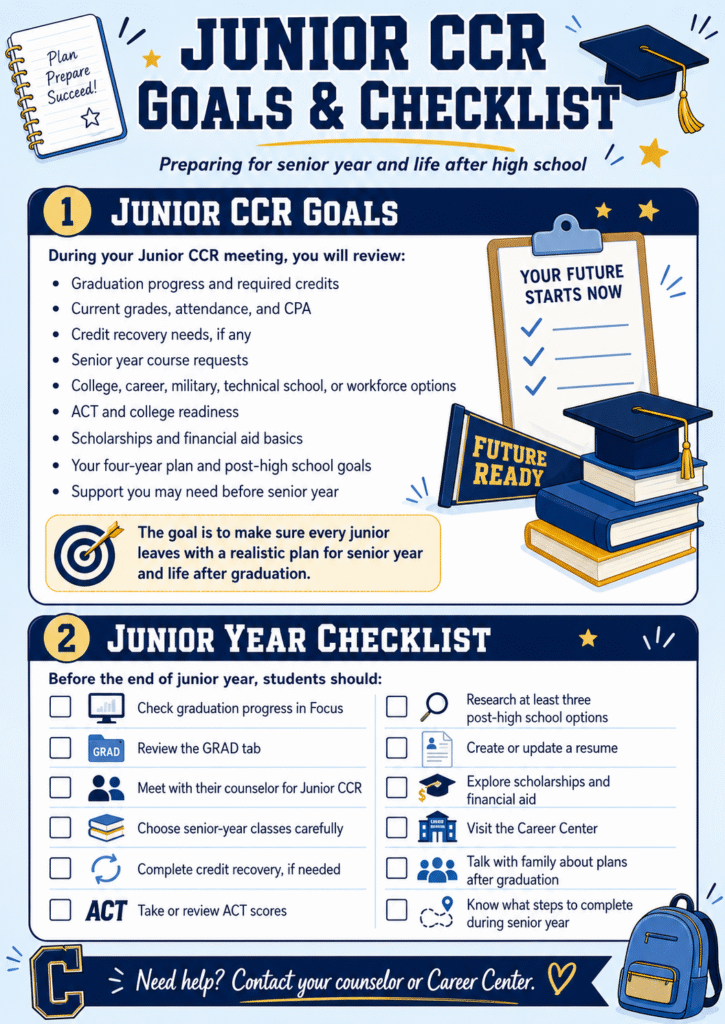
Junior year is one of the most important years for planning your future. This is the year to check your graduation progress, explore college and career options, prepare for senior-year deadlines, and make sure your course choices match your goals.
Your Junior CCR meeting helps you review your current progress and create a clear plan for your next steps after high school. This plan may include college, technical school, apprenticeships, military service, full-time work, certification programs, or another pathway that helps you move toward your future.
Students and families are encouraged to review this information together.
1. Check Your Graduation Progress
Junior year is the time to make sure you are on track to graduate.
Students should review:
- Required credits
- Failed or missing classes
- Current grades
- CPA
- Attendance
- Credit recovery needs
- Graduation requirements still missing
Students can check graduation progress in Focus using the GRAD tab. If something looks incorrect or confusing, contact your counselor as soon as possible.
Do not wait until senior year to fix graduation problems. The earlier you know what you need, the more options you have.
2. Choose Senior-Year Classes Carefully
Your senior-year schedule should support your graduation requirements and your goals after high school.
When choosing classes, think about:
- Graduation requirements
- Classes needed for college admission
- CTE pathways
- Concurrent Enrollment options
- AP or advanced classes
- Career interests
- Credit recovery needs
- Classes that help prepare you for your future
Your course requests should match your College and Career Readiness plan. Utah’s CCR process expects course registration and class schedules to be connected to the student’s CCR plan.
3. Make a Credit Recovery Plan
If you have failed a required class, you may need credit recovery.
Credit recovery options may include:
| Option | Best For | What to Do |
|---|---|---|
| Granger Credit Recovery | Students who need to make up failed required credits | Talk to your school counselor |
| Granite Online | Students who need online coursework | Check deadlines and availability |
| Summer Credit Recovery | Students who still need credits after the school year | Register during the open window (when available) |
| Other Approved Options | Special situations | Must be approved by your counselor |
For questions about credit recovery, please contact:
| GHS Credit Recovery Steps: Step 1:Meet with your school counselor to sign up for the class. Step 2: Attend your assigned class. Credit Recovery teachers: 1A, 2A, Room F-109: Mr. Ehounou at aehounou@graniteschools.org 5th, Room H-208: Mr. Pritchard at jpritchard@graniteschools.org 10th, Room H-206: Ms. Gonzalez at sgonzalez1@graniteschools.org. |
4. Explore Your Options After High School
Every junior should begin thinking seriously about their plan after graduation.
Your plan may include:
- Four-year college or university
- Community college
- Technical college
- Apprenticeship
- Military
- Full-time employment
- Mission or service year
- Certification program
- Career training program
College does not only mean a four-year university. College can also mean technical school, certificates, apprenticeships, or training that helps you prepare for a career.
If you are not sure what you want to do yet, that is okay. Junior year is the perfect time to explore.
5. Research Colleges, Careers, and Training Programs
Students should research options that match their interests, strengths, and goals.
When researching, look at:
| Question | Why It Matters |
|---|---|
| What programs or majors are available? | Helps you find a good fit |
| What are the admission requirements? | Helps you prepare early |
| How much does it cost? | Helps you plan financially |
| What scholarships are available? | Helps reduce costs |
| Where is it located? | Helps you think about transportation and housing |
| What careers can it lead to? | Helps connect school to your future |
Helpful resources may include:
- Utah colleges and universities
- Utah technical colleges
- O*NET or My Next Move
- Keys to Success
- Career Center Resources
- Apprenticeship Utah
- Military recruiters (Talk to Mr. Platero in the Career Center)
- Scholarship search tools
6. Prepare for the ACT
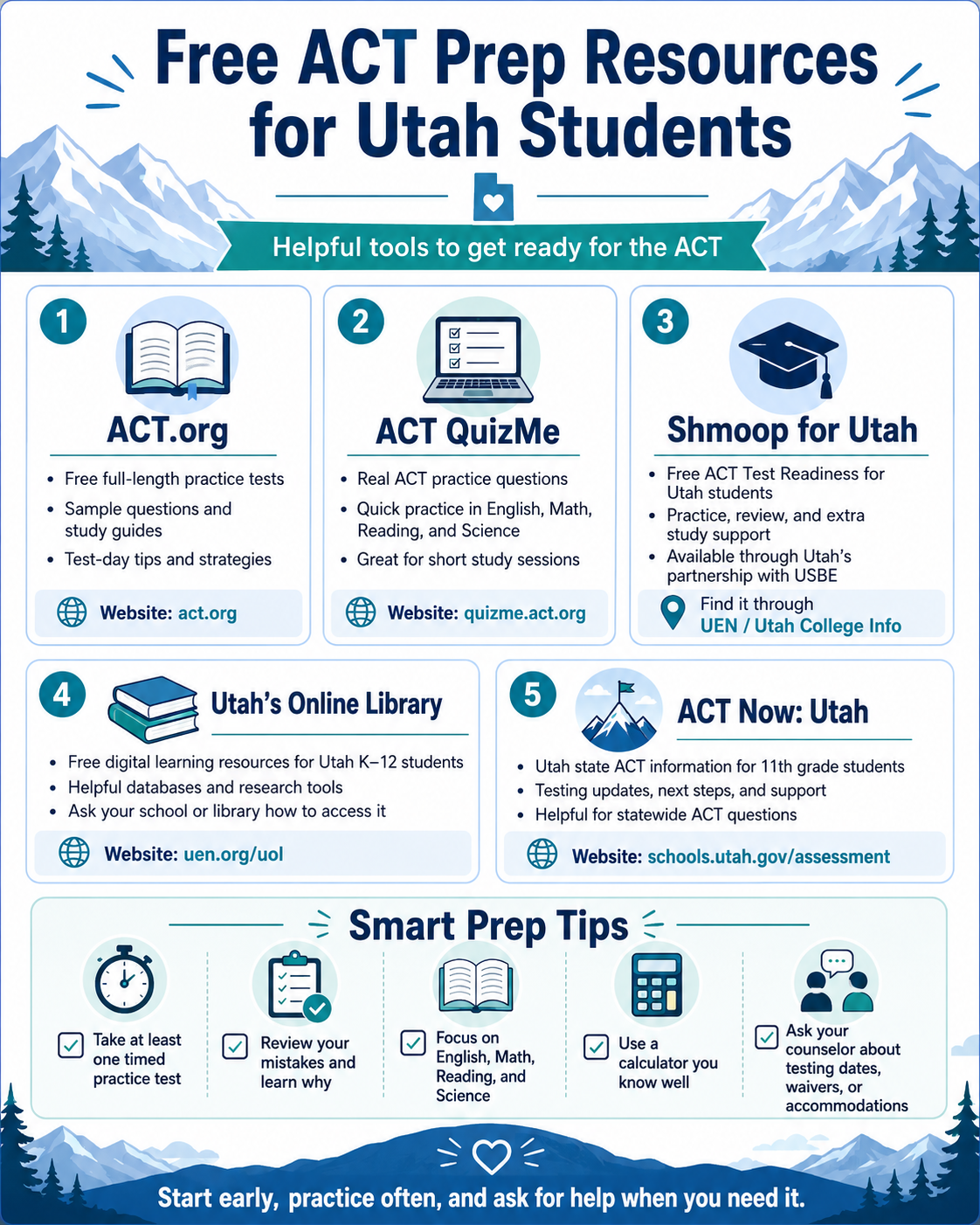
Most juniors take the ACT during junior year. ACT scores may be used for college admission, scholarships, placement, or program eligibility.
Students should:
- Review ACT scores
- Understand strengths and areas for improvement
- Practice test-taking strategies
- Consider retaking the ACT if it supports their goals
- Check whether colleges or scholarships require ACT scores
- Use free ACT prep resources when available
- ACT Test Prep: Schmoop.com
- Passoword: DIRTYSODA
- PROG Dev Center Test Prep Academy
If you are not sure whether you should retake the ACT, talk with your counselor or the Career Center.
7. Start a Resume
Junior year is a great time to create or update your resume.
Your resume can include:
- Education
- Work experience
- Volunteer service
- Leadership
- Clubs and activities
- Awards
- Skills
- Languages spoken
- Certifications
- Sports or extracurricular activities
You may need a resume for:
- Jobs
- Scholarships
- College applications
- Internships
- Leadership opportunities
- Letters of recommendation
Keep your resume updated so you are ready for senior year.
8. Learn About Financial Aid and Scholarships
You do not need to wait until senior year to learn about paying for school or training.
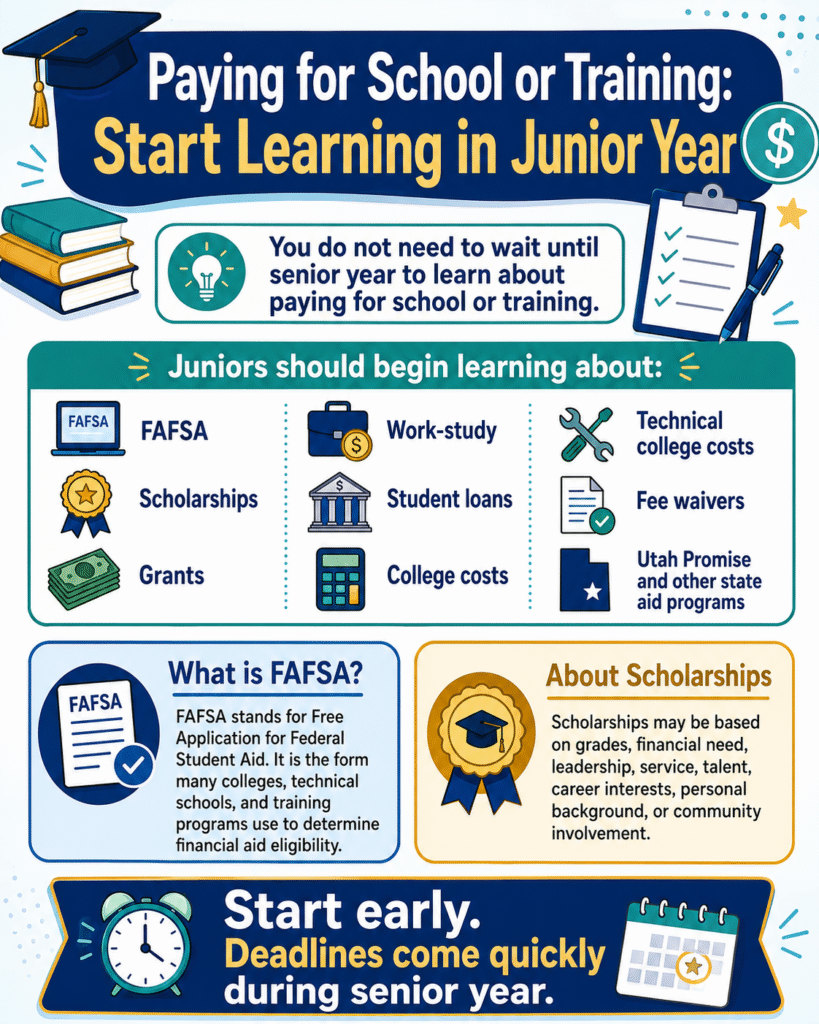
Juniors should begin learning about:
- FAFSA
- Scholarships
- Grants
- Work-study
- Student loans
- College costs
- Technical college costs
- Fee waivers
- Utah Promise and other state aid programs
FAFSA stands for Free Application for Federal Student Aid. It is the form many colleges, technical schools, and training programs use to determine financial aid eligibility.
Scholarships may be based on grades, financial need, leadership, service, talent, career interests, personal background, or community involvement.
Start early. Deadlines come quickly during senior year.
9. Ask for Help and Build Your Support Team
Junior year can feel stressful because students are thinking more seriously about graduation and life after high school. You do not have to figure it out alone.
Your support team may include:
- Parent or guardian
- School counselor
- Career Center staff
- College access advisor
- Teachers
- Coaches
- Club advisors
- Family members
- Trusted adults
- Community mentors
Before senior year, identify at least one adult who can help you with applications, deadlines, scholarships, or planning.
10. Social and Emotional Readiness
Being ready for life after high school is not only about credits and applications. It also includes learning how to manage stress, ask for help, communicate with adults, and make responsible decisions.
Students should practice:
- Managing time
- Meeting deadlines
- Checking email
- Asking questions
- Handling stress
- Communicating professionally
- Making appointments
- Following through
- Advocating for themselves
- Soft Skills
These skills matter in college, work, technical training, military service, and adult life. ASCA’s student standards include academic, career, and social/emotional development because all three areas help students become college, career, and life ready.












You must be logged in to post a comment.