


Senior CCR: Graduation, College, Career & Life After High School
Senior year is an exciting and important year. This page is here to help you stay on track for graduation and prepare for your next step after high school.
Whether your plan is college, technical school, an apprenticeship, the military, full-time work, or another pathway, your counselor and the Career Center are here to help you make a plan and finish strong.
1. Check Your Graduation Status
The first step of senior year is making sure you are on track to graduate.
Students should check:
- Meet with your Schoool Counselor at the start of your senior year to go over:
- Required graduation credits
- Failed or missing classes
- CPA/graduation ceremony eligibility
- Credit recovery needs
- Current grades and attendance
- Any graduation requirement that still needs to be completed
Students can check their graduation progress in Focus by reviewing the GRAD tab. If something looks incorrect or confusing, please contact your counselor as soon as possible.
Do not wait until the end of the year to ask for help. The earlier you check, the more options you have.
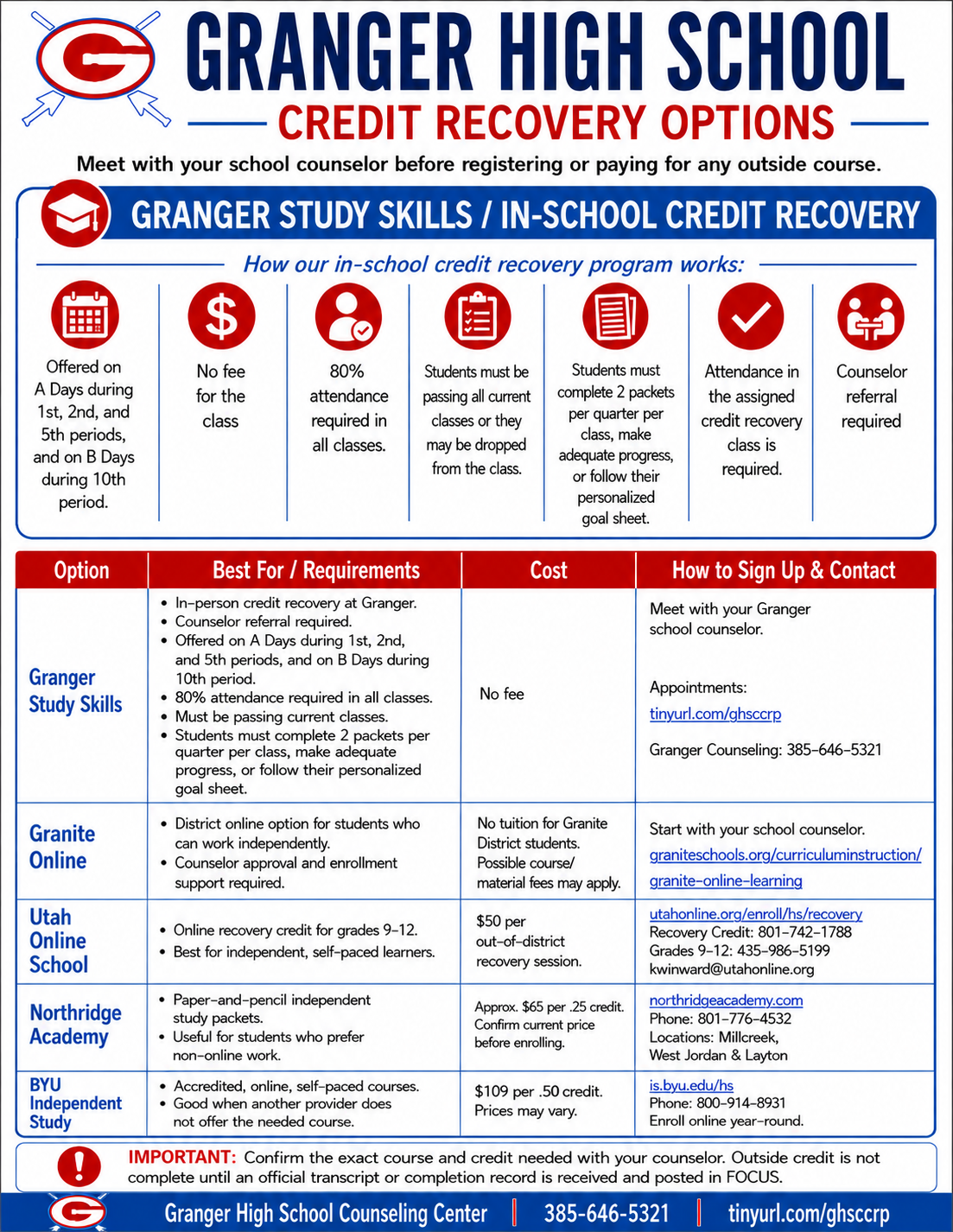
2. Credit Recovery
If you failed a class that is required for graduation, you may need to complete credit recovery.
3. Choose Your Plan After High School
Every senior should have a plan for what comes next.
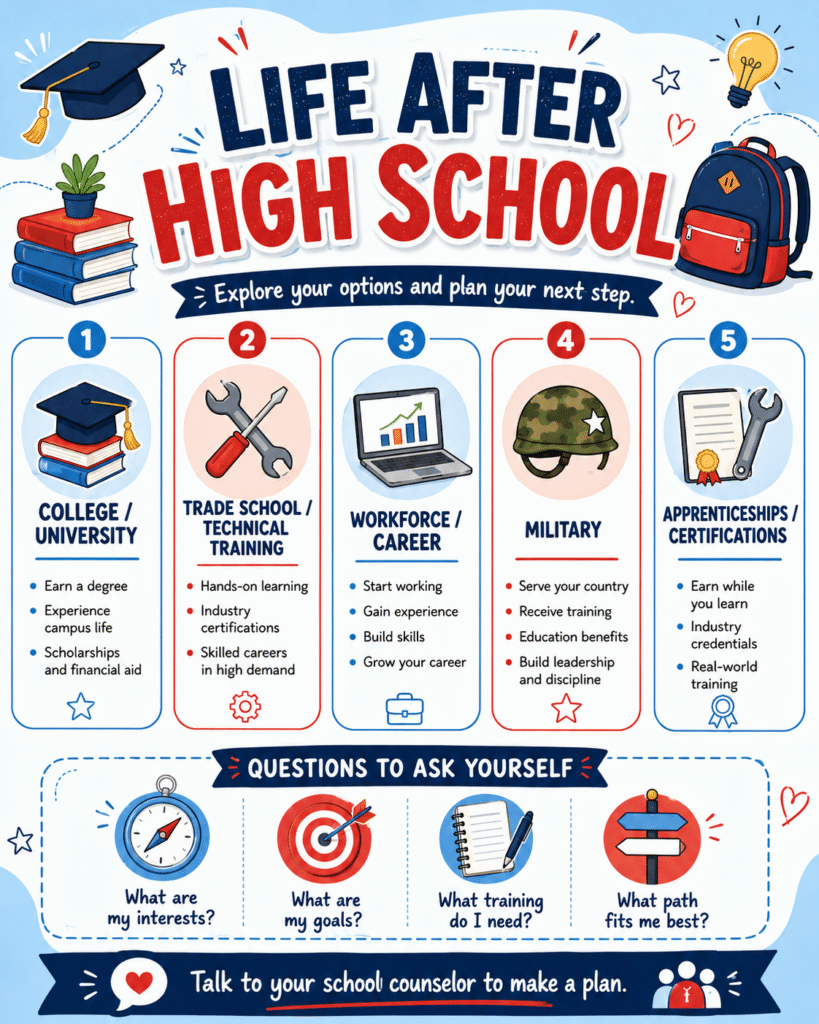
Your plan may include:
- Utah College Directory
- Apprenticeship / DWS Apprenticeships
- Unions /
- Military
- Full-time employment
- YouScience
- My Next Move
- Mission, service, or gap year with a plan
- Certificate or training program
College does not only mean a four-year university. College can also mean technical training, certification programs, apprenticeships, or other education that prepares you for a career.
If you are not sure what you want to do yet, that is okay. Your counselor and the Career Center can help you explore your options.
4. Apply for College, Technical School, Training, or Work
Seniors should complete at least one application connected to their post-high school plan. This may include:
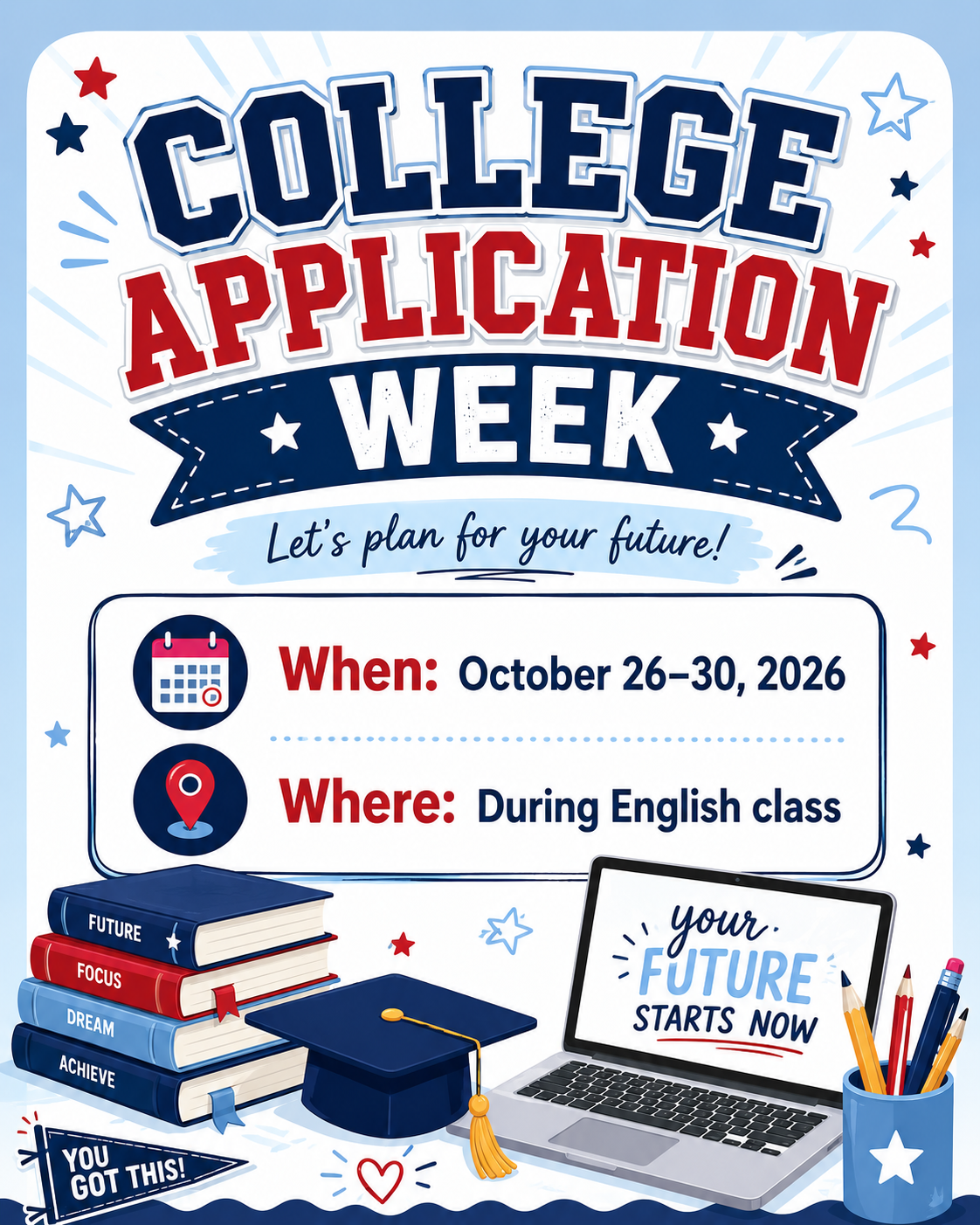
College application- can be completed during College Application Week (CAW)
- When: October 26–30, 2026
- Where: During English class
- Technical college application
- When: October 26–30, 2026
- Where: During English class
- Apprenticeship application
- If you need help please contact our Work Based Learning Specialist, Mrs. Stagg at (385) 646-6372 or via email: Email Mrs. Stagg.
- Job application
- Military contact or enlistment process
- Training or certification program
- Scholarship or program application
BEFORE YOU BEGIN
A little preparation can make your next step easier.
☐ Have a personal email address: Use an email you check regularly and can keep using after graduation for applications, scholarships, and Parchment.
☐ Bring your charged Chromebook or laptop and cell phone: Make sure you can connect to the internet, access your email, and use your phone to receive verification codes.
☐ Have your account information ready: Make sure you can sign in to any applications you’ve started. Keep passwords private.
☐ Think about your options: Identify colleges, technical programs, or career pathways you’d like to explore—you don’t need to have everything decided.
☐ Gather information you may need: Know your mailing address, expected graduation date, and concurrent enrollment college ID numbers. Have information about your classes, activities, and work experience ready.
☐ Bring your questions: Write down questions about choosing a school, paying for training, requesting transcripts, or completing applications.
Still deciding? You’re in the right place. Your counselors and college access advisor will help you explore your options and take a meaningful next step.
Keep track of usernames, passwords, deadlines, and application status. Use an email address you check regularly and make sure it is appropriate and professional.
5. Send Your Transcript Through Parchment
Parchment is the website students use to send official high school transcripts to colleges, universities, and some scholarship programs.
You may need to send a transcript when you:
- Apply to college
- Apply for scholarships
- Need proof of high school grades
- Need a final transcript after graduation
Seniors can usually send transcripts for free while they are still enrolled in high school. After graduation, there may be a fee.
Make sure you send your final transcript after graduation if your college, university, or program requires it.
6. FAFSA and Financial Aid
FAFSA stands for Free Application for Federal Student Aid. It is the form students complete to see if they qualify for grants, work-study, student loans, and some scholarships.
FAFSA is not only for students attending a four-year college. Many technical colleges, community colleges, and training programs also use FAFSA.
Need help with FAFSA? Attend
Students and families may need:
- Student Social Security number, if applicable
- Parent/guardian information, if required
- Student and parent FSA ID
- Tax information
- A personal email address
- List of schools or programs the student is considering
If you are not sure whether FAFSA applies to you, please ask your counselor or the Career Center. It is better to ask than to miss out on possible financial aid.

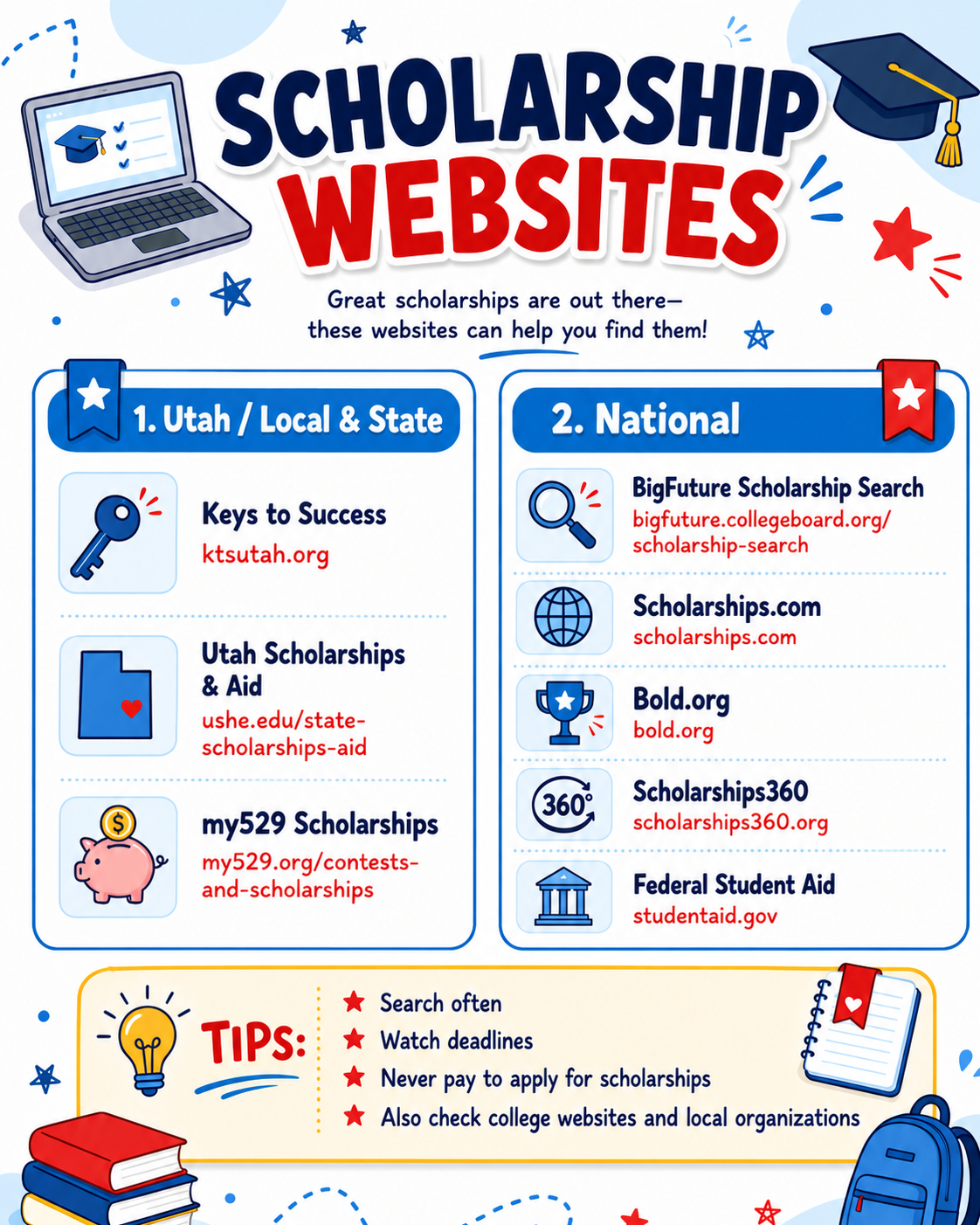
7. Scholarships
Scholarships are money that can help pay for college, technical school, or training. Scholarships do not usually need to be paid back.
Students should:
- Check scholarship lists often
- Apply early
- Read requirements carefully
- Ask for recommendation letters ahead of time
- Keep track of deadlines
- Apply for college-specific scholarships
- Never pay money to apply for a scholarship
Scholarships can be based on grades, financial need, leadership, service, career interests, talents, community involvement, or personal background.
Even small scholarships can help.
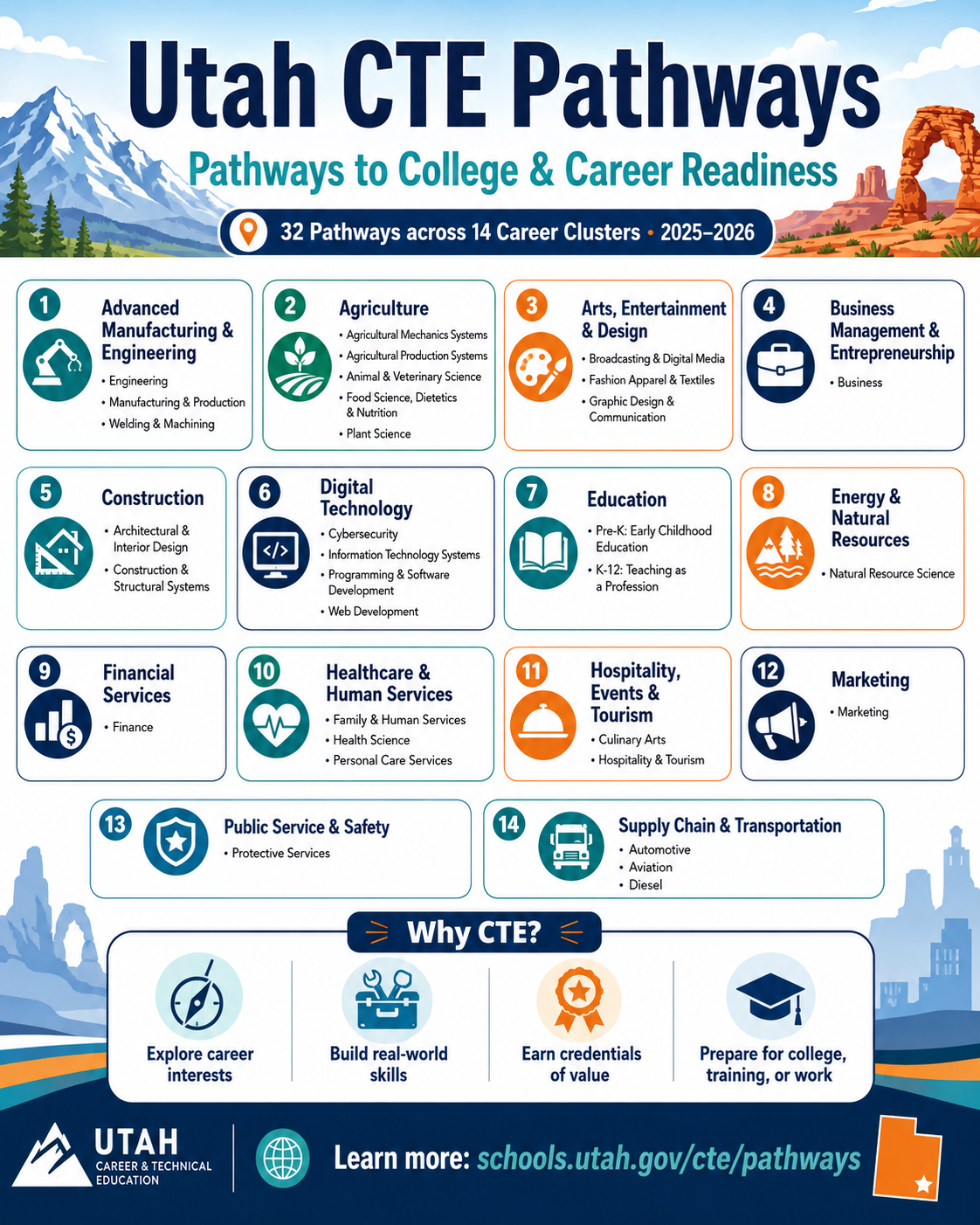
8. Career and Technical Education Options
Not every student needs the same path after high school. Many students choose technical training, apprenticeships, certifications, or career programs that lead directly to employment.
Career and technical options may include:
- Military career training
- Salt Lake Community College
- Utah technical colleges
- Apprenticeship programs
- Certification programs
- Healthcare training
- Construction trades
- Information technology
- Automotive programs
- Cosmetology or barbering
- Business and finance pathways
If you want to work after graduation, we still encourage you to make a plan that includes training, certification, or career growth.
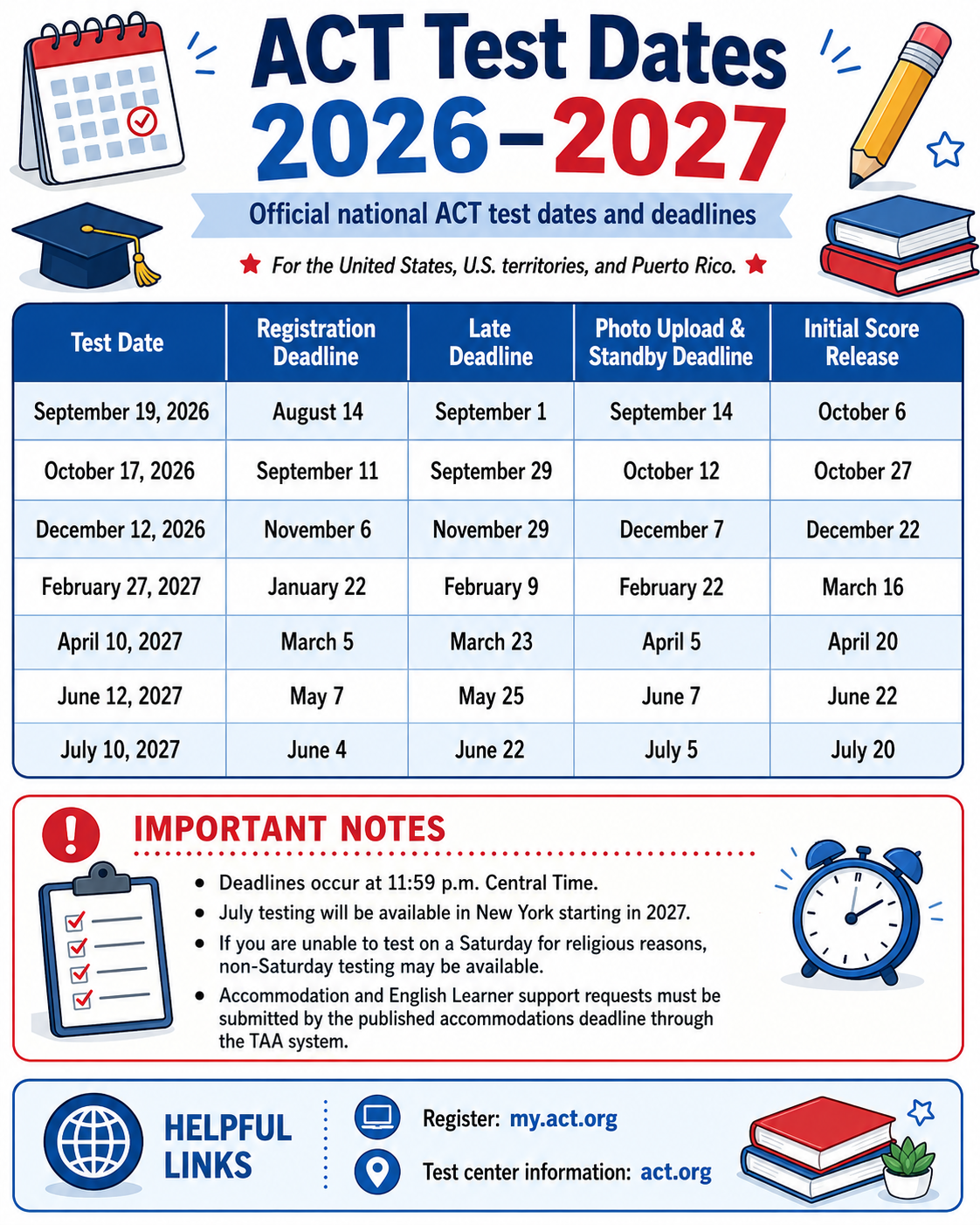
9. ACT and College Readiness
Some colleges, scholarships, or programs may use ACT scores for admission, placement, or scholarship opportunities.
Students should review:
- ACT scores
- College admission requirements
- Scholarship requirements
- Placement testing requirements
- Retake options, if needed
If you are not sure whether you need to retake the ACT, talk with your counselor or the Career Center.
ACT Test Prep: Schmoop.com
Passoword: DIRTYSODA
10. Life After High School
Graduation is not just about finishing high school. It is also about being ready for your next step.
Before graduation, seniors should think about:
- Transportation
- Housing
- Budgeting
- Work schedule
- School schedule
- Mental health support
- Health insurance
- Important documents
- Reliable email access
- Who to contact when they need help
Students should also know how to:
- Make appointments
- Check email regularly
- Communicate professionally
- Ask for help
- Meet deadlines
- Follow up on applications
- Read messages from colleges or programs
These skills matter in college, work, training, and adult life.
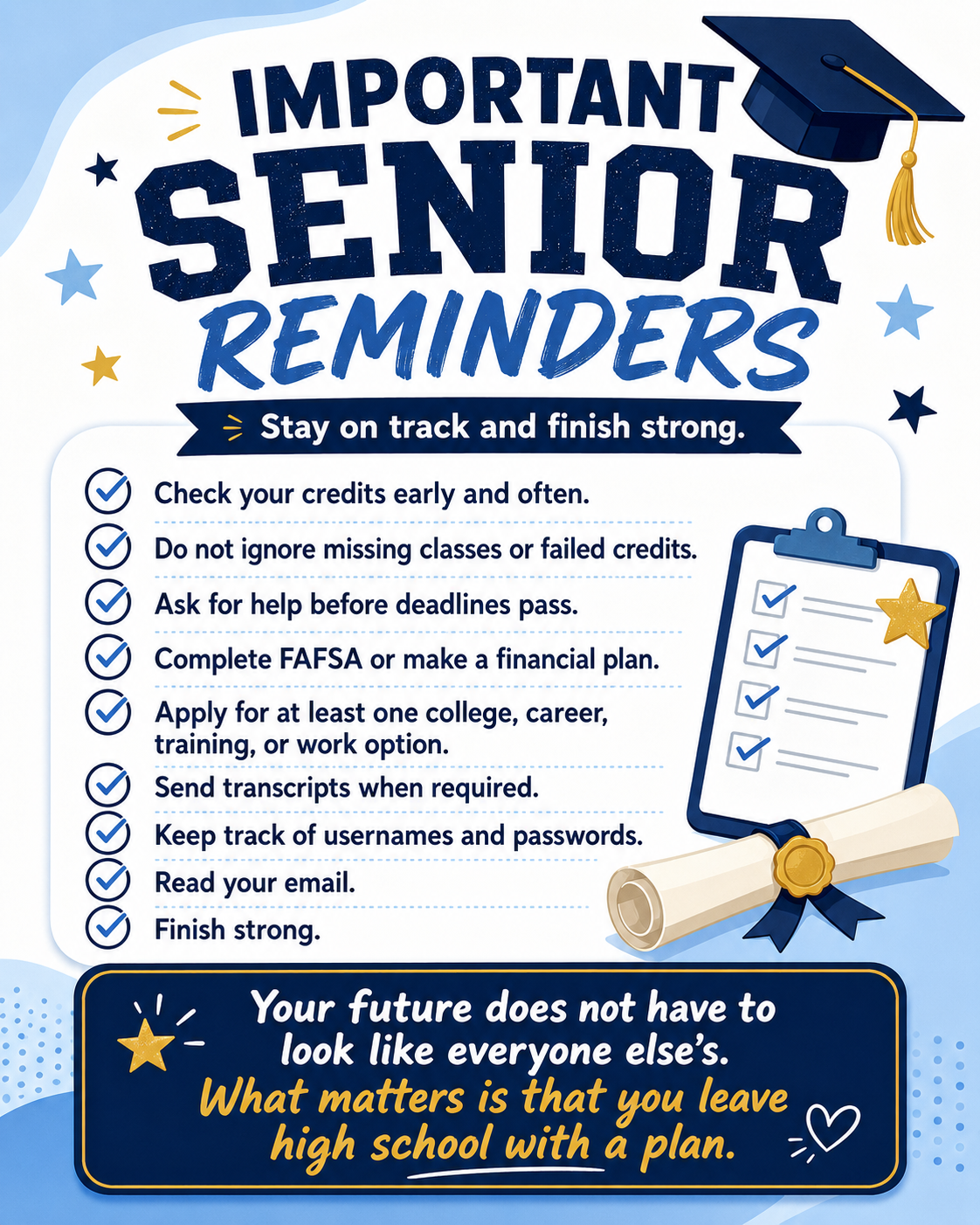
Important Senior Reminders
Need Help?
Your counselor and the Career Center are here to support you.
Please reach out if you need help with:
- Graduation requirements
- Credit recovery
- Course completion
- College applications
- Technical school applications
- FAFSA
- Scholarships
- Parchment/transcripts
- Career planning
- Military options
- Apprenticeships
- Life after high school planning
- Order your cap & gown
- Suicide Awareness
You do not have to figure everything out alone. Ask early. We are here to help.













You must be logged in to post a comment.