
Sophomore year is an important time for students to check their graduation progress, explore career interests, and make a plan for junior and senior year. A CCR meeting helps students and families understand where the student is now, what classes they may need next, and what steps can help prepare them for life after high school. The goal is not to have everything figured out. The goal is to help students understand their options, ask questions, and make thoughtful choices for the future.
What Is a Sophomore CCR?
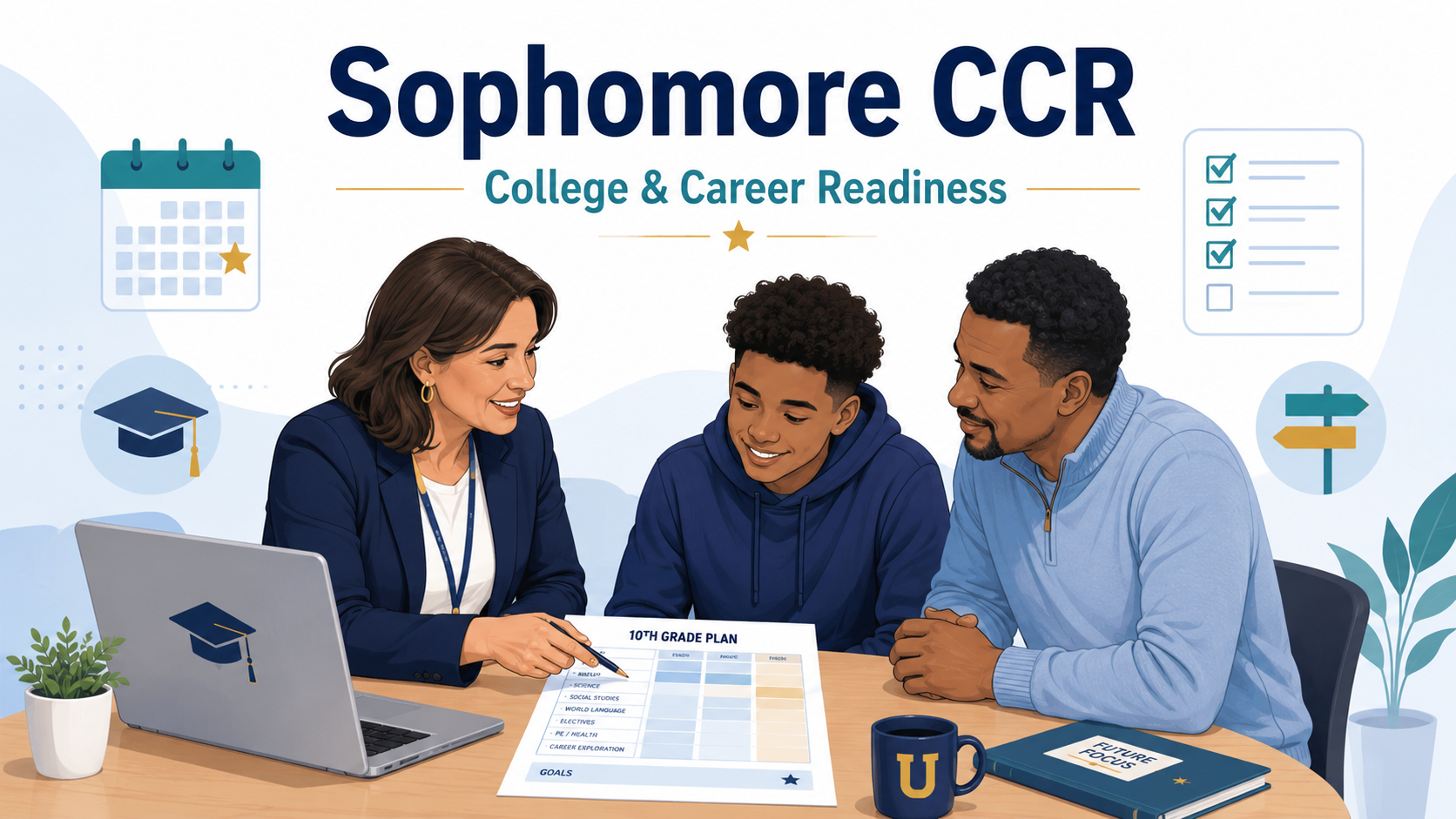
A Sophomore CCR is a College and Career Readiness meeting with the student, parent/guardian, and school counselor.
During the meeting, we may review:
- Graduation progress
- Current grades and credits
- Classes needed for junior and senior year
- Career interests and goals
- CTE pathways and electives
- Honors, AP, and Concurrent Enrollment options
- ACT and college preparation
- Support the student may need to stay on track
Why Sophomore Year Matters
Sophomore year helps students prepare for the more important decisions they will make in 11th and 12th grade.
Students should begin thinking about:
- Am I on track to graduate?
- What classes should I take next year?
- What careers or college programs interest me?
- Should I consider CTE, AP, Honors, or Concurrent Enrollment?
- What habits do I need to improve before junior year?
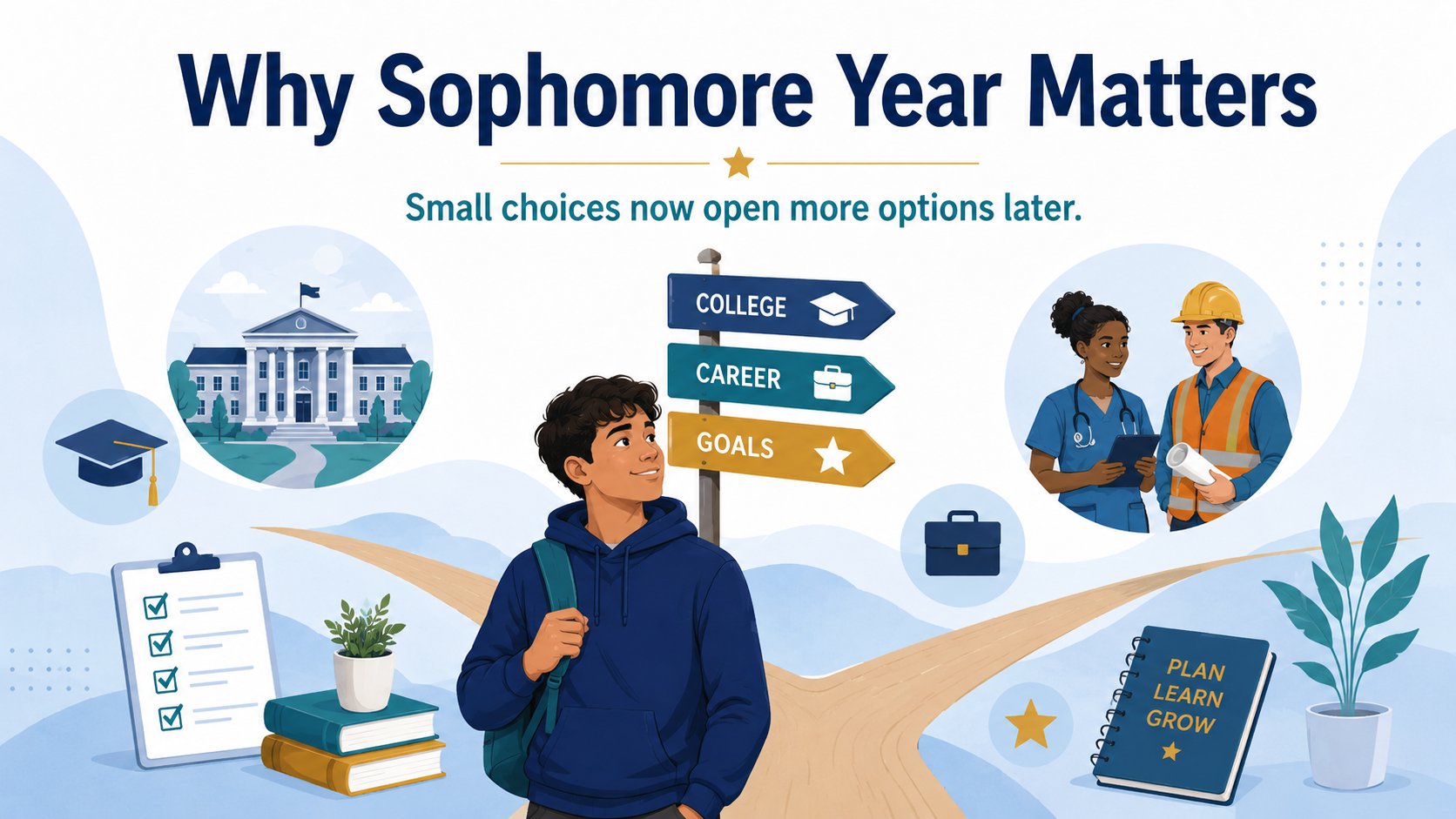
Small choices now can create more options later.
Before Your CCR Meeting
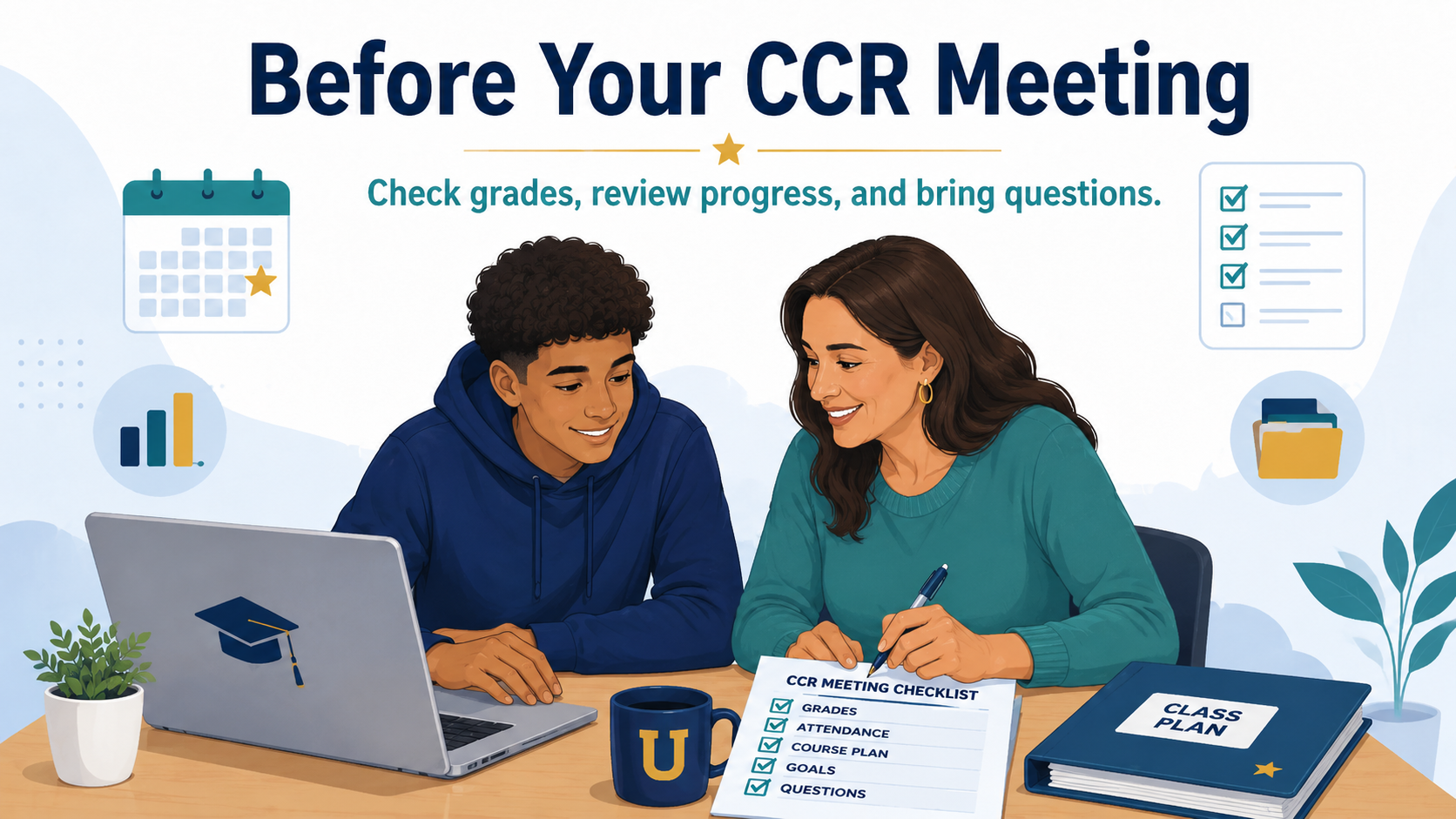
Before the meeting, students and families are encouraged to:
- Check grades and attendance in Focus
- Review graduation progress in the Grad Requirements tab
- Talk about possible classes for junior year
- Think about career interests
- Write down questions for the counselor
Graduation Progress
During the CCR, students will review whether they are on track for graduation.
Students should understand:
- Credits earned
- Credits still needed
- Failed or missing credits
- Credit recovery options, if needed
- GPA and how grades affect future opportunities
- The importance of attendance
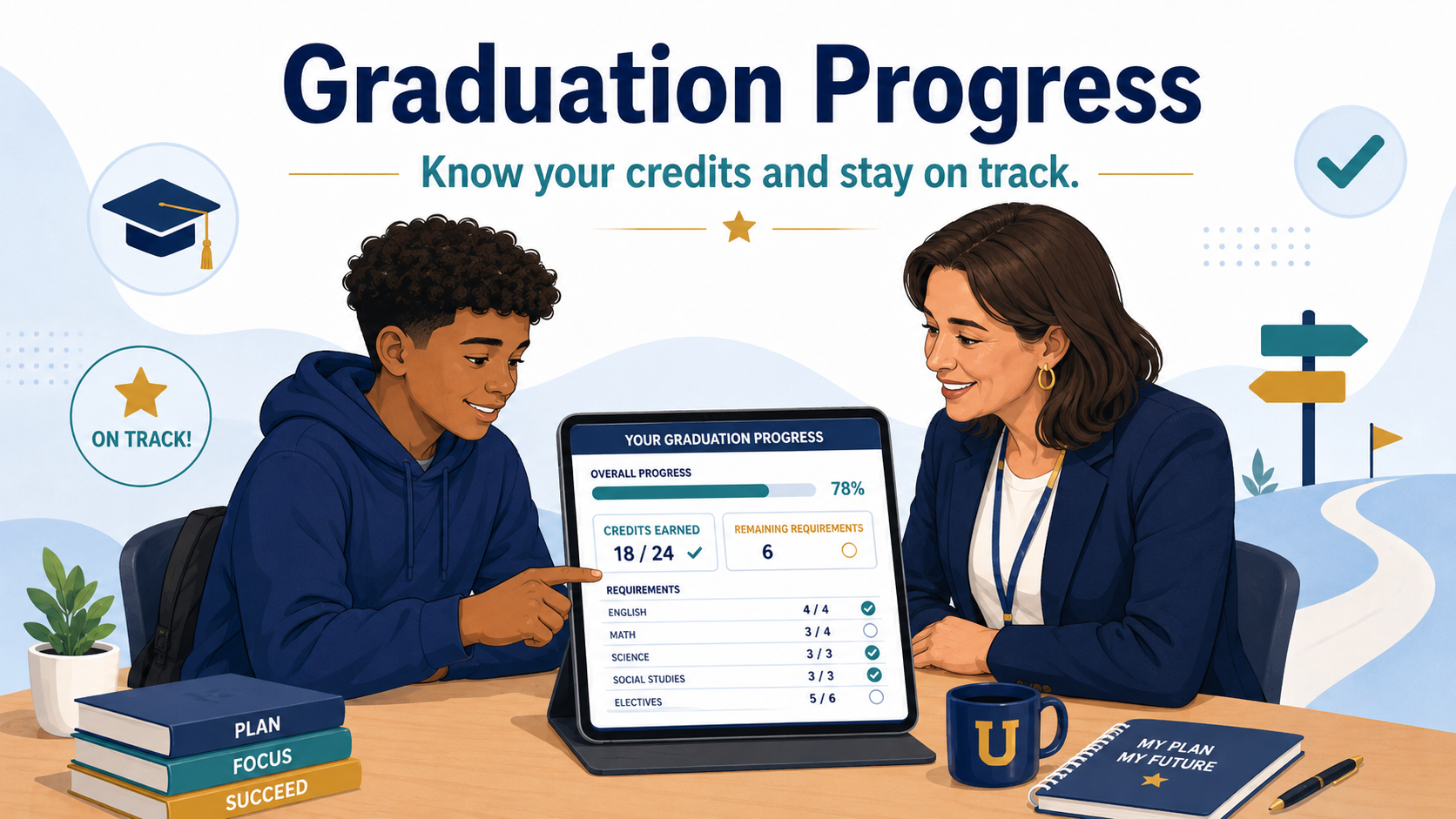
If a student is behind, the counselor can help explain options to get back on track.
Planning Classes for Junior Year
Junior year is very important for college, career, and graduation planning. Sophomores should choose classes carefully.
When choosing classes, students should think about:
- Graduation requirements
- Career interests
- CTE pathways
- College entrance requirements
- Scholarship preparation
- Balance between challenge and support
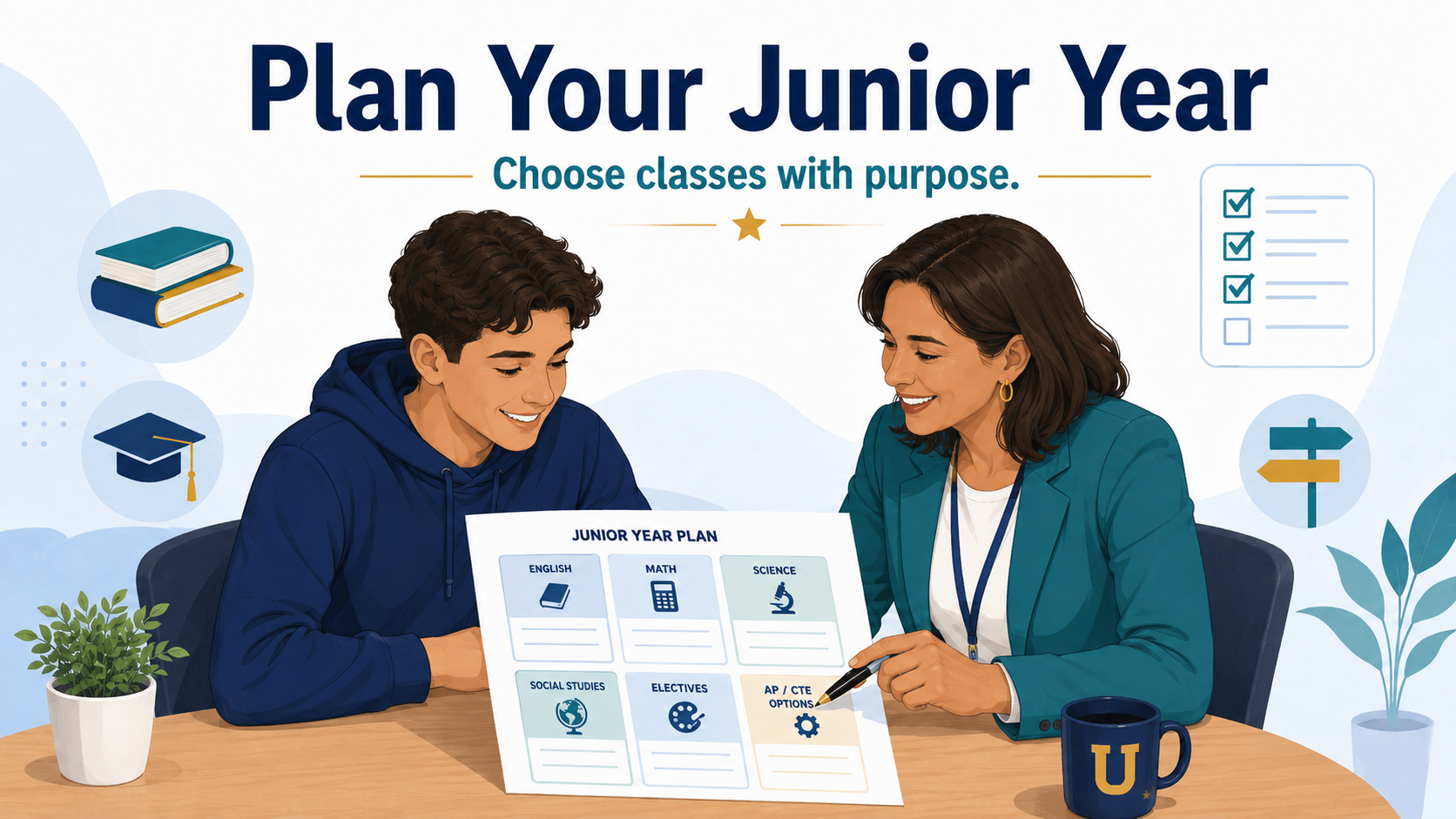
Students are encouraged to choose classes with a purpose, not just to fill their schedule.
College and Career Exploration
Sophomore year is a great time to explore future options. Students do not need to choose one final career, but they should start learning about different pathways.
Students can explore:
- Technical college programs
- Two-year colleges
- Four-year universities
- Apprenticeships
- Military options
- Careers that require certificates, licenses, or degrees

Helpful resources:
- Keys to Success
- O*NET & My Next Move (also available in Spanish)
- Utah Futures
- Utah Technical Colleges
- Utah System of Higher Education
- YouScience
CTE Pathways and Electives
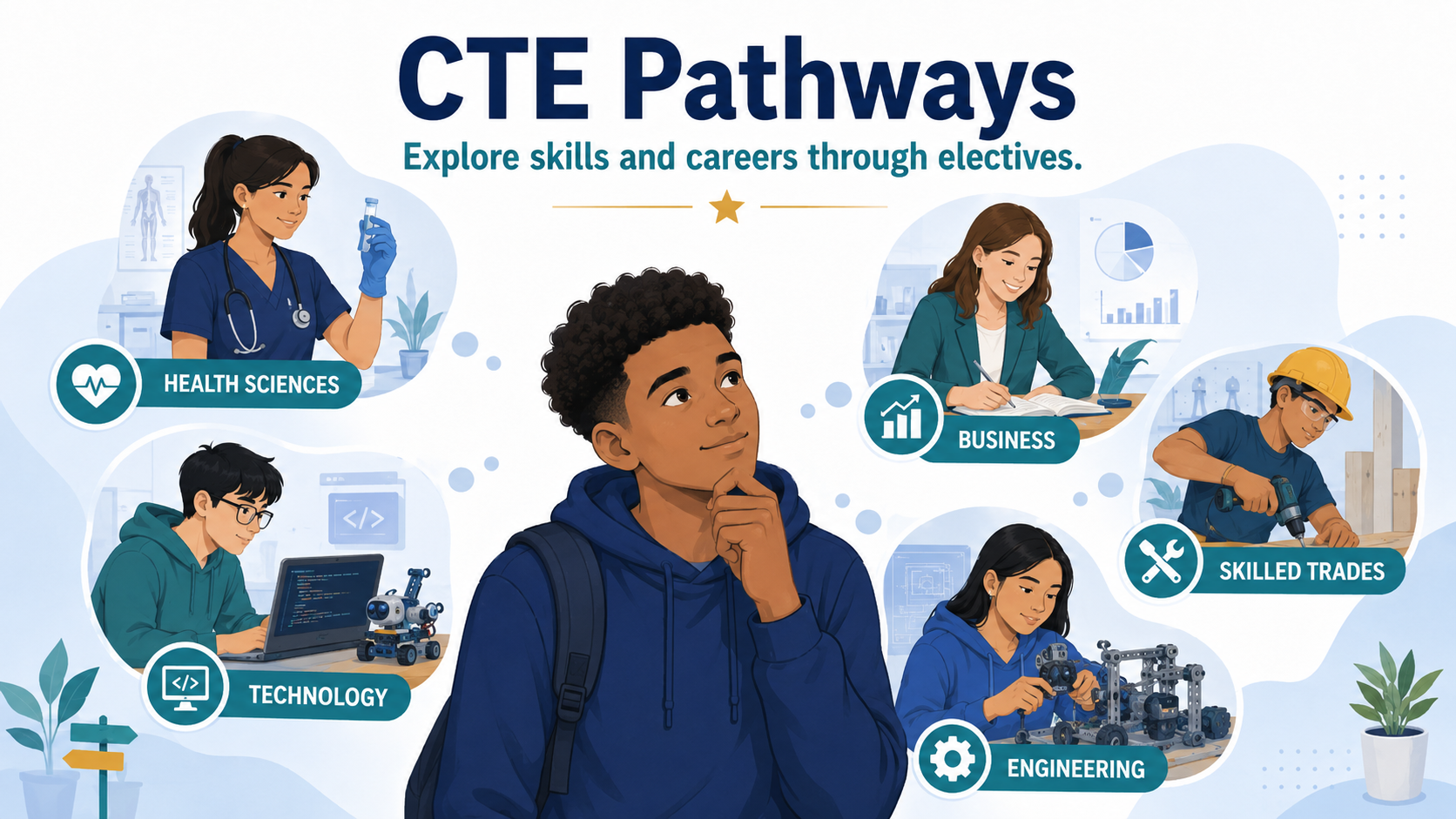
CTE classes help students explore careers while still in high school. These classes can help students build skills, discover interests, and prepare for future training or employment.
Students may want to explore pathways in:
- Health sciences
- Business and marketing
- Information technology
- Skilled trades
- Education
- Engineering and technology
- Arts, media, and communication
- Public safety
Learn more about Utah CTE programs here:
Utah Career and Technical Education
Advanced Course Options
Some students may be ready for more challenging classes in junior or senior year.
Advanced options may include:
- Honors classes
- AP classes
- Concurrent Enrollment classes
- CTE courses
- Certificate or career pathway programs

Students should choose advanced classes carefully and think about workload, grades, activities, work, family responsibilities, and personal well-being.
Student Readiness Skills
College and career readiness is not only about grades. Students also need skills that help them succeed in school, work, relationships, and life.
Sophomores should continue building:
- Responsibility
- Organization
- Time management
- Communication
- Problem-solving
- Self-advocacy
- Healthy coping skills
- Confidence
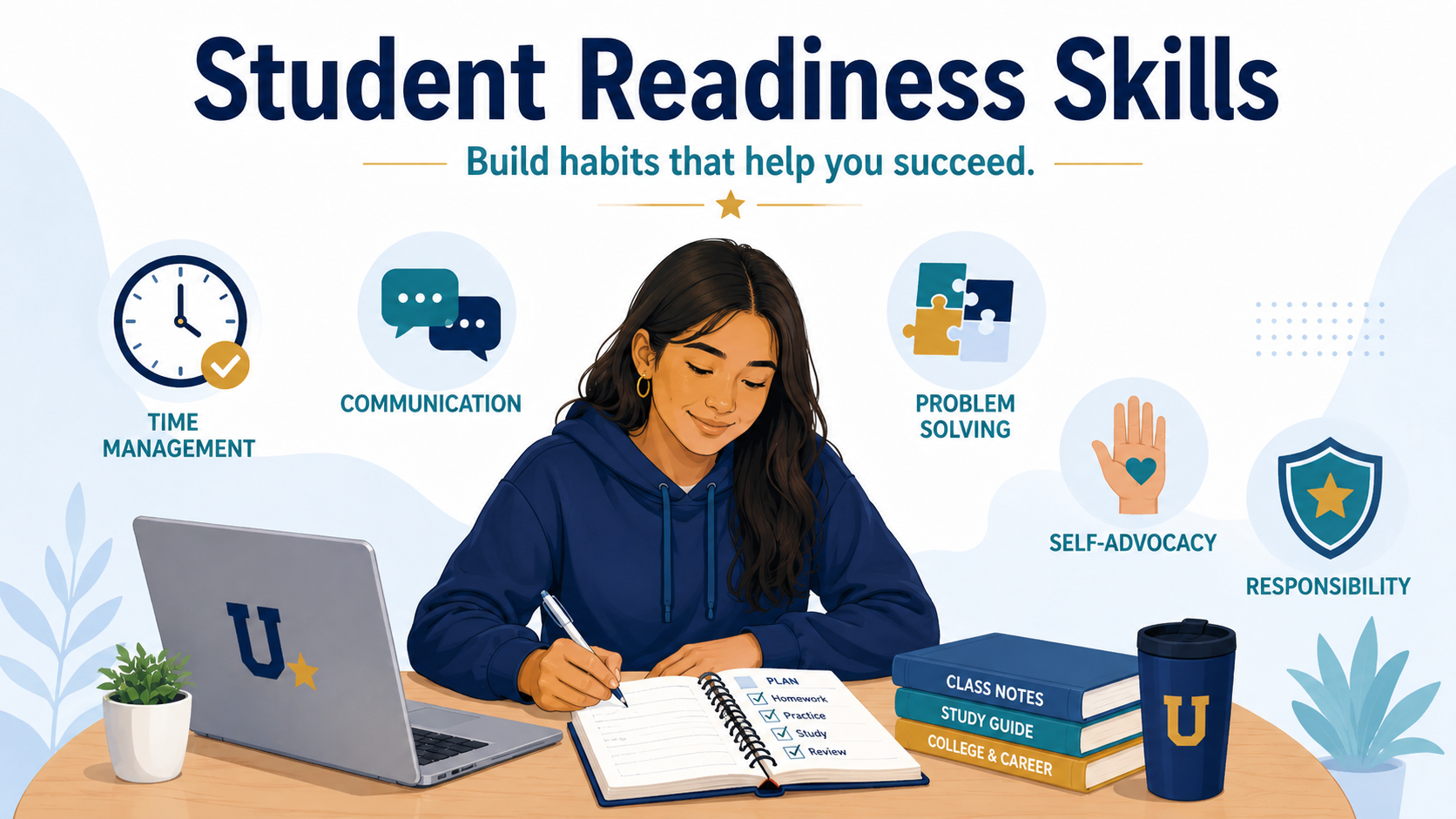
These skills help students prepare for high school graduation and life after high school.
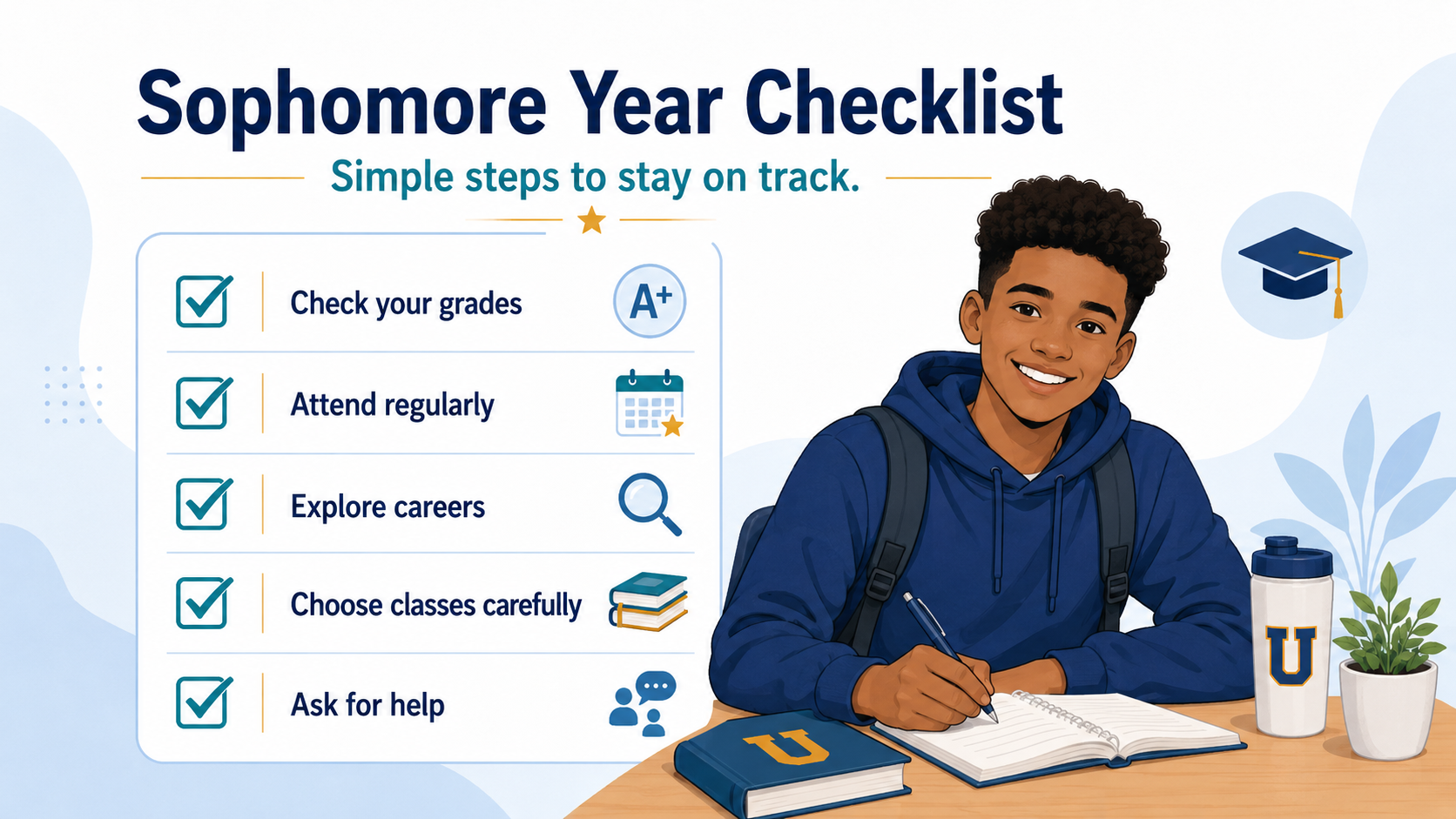
Sophomore Year Checklist
Students should work on these goals during sophomore year:
- Check grades often
- Attend school regularly
- Stay on track for graduation
- Make up missing credits if needed
- Explore career interests
- Choose junior year classes carefully
- Learn about CTE pathways
- Consider AP, Honors, or Concurrent Enrollment
- Build strong study and organization habits
- Ask for help early
Questions to Ask During Your CCR
Students and parents may want to ask:
- Am I on track for graduation?
- Do I have any missing or failed credits?
- What classes should I take next year?
- What career pathways match my interests?
- Should I consider AP, Honors, Concurrent Enrollment, or CTE classes?
- How can I prepare for the ACT?
- What can I do now to be ready for senior year?
Helpful Links
- Focus Student/Parent Portal
- Keys to Success
- Utah Career and Technical Education
- Utah Technical Colleges
- Utah System of Higher Education
- Federal Student Aid / FAFSA
Schedule a CCR Meeting
Students and parents are encouraged to attend the Sophomore CCR meeting together. This meeting is a chance to review progress, ask questions, and make a plan for the next two years of high school.
Remember
Sophomore year is not about having every answer. It is about learning, exploring, and making a plan.
Your choices now can help create more options for your future.









You must be logged in to post a comment.